

A strong understanding of Process Safety Management (PSM) is critical for businesses that work with a wide range of hazardous chemicals. While occupational safety focuses on preventing individual workplace accidents and hazards, process safety management addresses large-scale chemical process risks that can lead to catastrophic incidents.
With a strong process safety management program in place, companies can engage in effective management of hazards that minimize worker exposure to risk and emphasize alignment with OSHA standards. Compliance with PSM is a legal requirement under OSHA regulations and the Clean Air Act Amendments.
OSHA’s process safety management and the OSHA PSM standard are designed to prevent catastrophic incidents, catastrophic releases, and major chemical accidents, protecting both workers and public health.
The process safety management standard applies to facilities handling highly hazardous chemicals, including flammable liquids, explosive chemicals, toxic chemicals, reactive chemicals, and toxic material. Hazard identification, risk assessment, and safety measures are essential to address associated risks and prevent large-scale disasters.
Let’s build a strong understanding of the basics of PSM, from a definition of the concept to the tools available to businesses for managing PSM regulations and implementing an effective safety program. Chemical facility safety is a key focus of regulatory updates, and effective PSM programs help safeguard public health and the environment.
Businesses that work with hazardous chemicals need a strong PSM program.
What is Process Safety Management and why is it important?
PSM is a shortened term that refers to a specific OSHA rule, the Process Safety Management of Highly Hazardous Chemicals standard. This rule was developed in response to a widespread, recognized concern related to unexpected releases of potentially dangerous liquids and gases across a number of different industries.
Proper controls, oversight, safety processes, and employee education are vital for mitigating the possibility of accidental releases that can cause a wide range of negative outcomes. The PSM standard focuses on the “management of hazards associated with processes using highly hazardous chemicals.” Regular safety audits and quality control are essential for maintaining process safety and compliance.
OSHA’s approach to managing these chemical hazards involves a comprehensive program that brings together tools for oversight, a variety of safe handling procedures, and effective management practices. Risk studies such as HAZOPs and PHAs are essential tools for identifying hazards and evaluating process safety risks. There are separate standards for the general industry and construction business categories, although both standards share the same goal and many other similarities.
Whether a business manufactures hazardous chemicals itself or transports, utilizes or stores them, it needs to have a plan in place to ensure all uses of and interactions with those substances are compliant with OSHA rules. Any proposed change must be supported by a technical basis to ensure safety and compliance.
Certain activities, such as servicing operations, drilling or servicing operations, and unoccupied remote facilities, may be exempt from PSM requirements. Compliance isn’t the only goal, of course. A commitment to strong PSM helps keep staff, facilities and their surrounding communities safe from accidental releases.
It is also important to ensure that each employee understands the procedures and that all employees involved are properly trained. Specialty work and high-hazard tasks require specialized training to ensure safety. Preventing accidents requires addressing health hazards and incorporating health considerations into operating procedures.
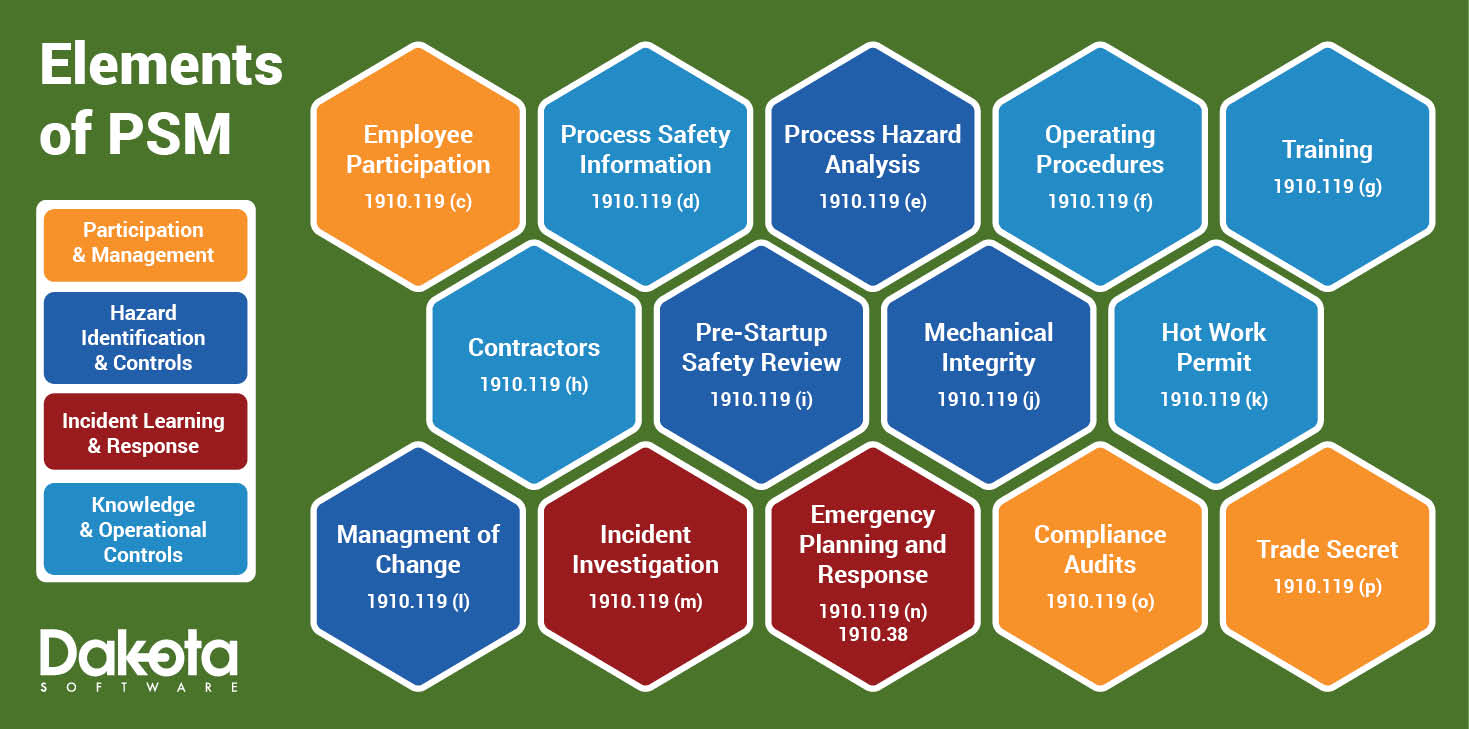
What are the 14 elements of PSM?
As is the case with many major standards, OSHA developed detailed guidance around the specifics needed for effective PSM, covering a variety of procedures, regulations, enforcement policies and similar concerns. A comprehensive approach to PSM involves these 14 elements:
Element1: Employee Participation
Businesses must emphasize the involvement of employees and their representatives throughout the PSM process and as updates occur.
Element 2: Process Safety Information
Businesses need to develop documentation of chemical and related process hazards, as well as those that come from equipment and other technology used in those workflows. They must also regularly update this information to maintain accuracy about current operations.
Element 3: Process Hazard Analysis
This comprehensive evaluation of potential hazards focuses on specific points where hazardous materials may be released and incidents where such an event happened in the past.
Element 4: Operating Procedures
Companies need to develop proper documentation that dictates how employees can safely and reliably engage in processes involving hazardous materials, as well as response plans if accidental exposure occurs. Communication of these plans to staff is critical.
Element 5: Training
Organizations must provide an overview of operations for staff who work with hazardous materials, as well as offer refresher training and document the instruction given to workers.
Element 6: Contractors
Just as employees need to be trained and made aware of the potential hazards of the processes they engage in, a similar responsibility exists for contracted workers.
Element 7: Pre-Startup Safety Review
Organizations have to conduct a safety review for new facilities, as well as for modified facilities whenever the process safety information is changed. Construction and equipment must conform to design specifications to ensure safe operation.
Element 8: Mechanical Integrity
The mechanical integrity and safe function of equipment used in various processes involving hazardous substances is critical for safety. Companies have a responsibility to develop and implement plans for testing and maintaining equipment.
Element 9: Hot Work Permit
Businesses need to secure a hot work permit when activities involving high temperatures that aren’t part of regular work occur near or on a covered process.
Element 10: Management of Change
Any proposed change to chemicals, technology, equipment, or facilities must be carefully evaluated and justified with a technical basis before implementation. Changes to current, documented and thoroughly considered processes require a similarly careful evaluation before any actions are taken.
Element 11: Incident Investigation
A plan for quickly investigating workplace incidents and developing effective responses that minimize the chances of a similar accident occurring in the future is a key responsibility in PSM.
Element 12: Emergency Planning and Response
In some cases, an incident can occur despite the best efforts of a business to address all potential concerns and mitigate the possibility of an unintended release of hazardous chemicals. An emergency action plan that informs response efforts and guides actions in time-sensitive situations are especially important.
Element 13: Compliance Audits
A regular compliance audit helps organizations make sure all aspects of their PSM are in line with OSHA regulations. Companies must complete this process once every three years and keep copies of the two most recent audits on file. This includes third party compliance audits.
Element 14: Trade Secrets
OSHA acknowledges the importance of trade secrets, noting that companies can require those involved in the various processes tied to PSM to sign confidentiality agreements to protect proprietary processes and workflows.
How can my business implement, maintain, improve and track PSM considerations?
PSM is a complicated consideration for modern businesses that utilize potentially hazardous chemicals, requiring that they carefully evaluate a wide range of processes from many different angles. Efficient management of PSM is therefore a vital need for companies that want to ensure strong compliance without involving excess time and effort on the part of staff.
Process safety management systems are essential for integrating safety management practices and ensuring compliance with regulatory standards such as OSHA, EU, and UK frameworks. Because OSHA only provides basic rules for how information should be recorded and stored, there are many different approaches that organizations can consider.
Additional Effective Strategies for Process Safety Management
There are effective strategies beyond the labor-intensive option of manually recording information and attempting to track it across many spreadsheets and documents and the expensive process of hiring outside professionals to manage compliance efforts.
Businesses should consider EHS Software that automates a variety of labor intensive processes, keep all aspects of PSM information easily accessible in a single digital location and allow staff to focus on areas where human input and involvement are critical.
Following industry best practices helps organizations avoid non compliance and legal penalties, while also supporting the safe handling of hazardous chemicals. The right platform allows companies to emphasize thorough compliance efforts without having to dedicate substantial employee resources to basic filing, data entry and information management tasks, as well as improving process safety by providing tools for process safety management.
Conclusions on Process Safety Management PSM
Emergency planning is a critical part of occupational safety and process hazard analysis. Emphasizing emergency response and emergency operations is essential for preparing for and managing hazardous chemical releases that could expose employees to serious risks.
Proper planning, process safety management systems and training ensure that employees are ready to respond effectively to emergencies and minimize harm. This important for any organization’s safety and health, helping to prevent accidents and get PSM program adoption.
Ongoing improvements in safety are driven by regulatory updates and the adoption of advanced safety management systems, such as Pre-Startup Safety Review (PSSR) checklists, ensuring safer workplaces, improving emergency response and compliance with evolving standards. It is also wise to include refresher training as part of an organization’s operating procedures.