
Maintaining a safe work environment in high-risk industries is more than just compliance—it’s about protecting people, performance, and reputation. Safety management software plays a crucial role in supporting the well-being of employees and the entire organization by promoting a culture of safety and ensuring consistent application of safety protocols.
Just look at the 2017 flash fire at a corn processing plant in Wisconsin. The explosion killed five workers and injured a dozen more. Investigators found that the company had been cited for combustible dust hazards multiple times before the incident, and yet, proper safety controls, training, and preventative measures were inconsistently applied or poorly documented. As a result, company officials were served prison time, and the company received hefty fines from OSHA.
This tragedy wasn’t the result of a single oversight; it was the product of fragmented systems, reactive protocols, and gaps in accountability. The story above is an extreme end of the spectrum of what can happen when safety isn’t prioritized, but unfortunately it also isn’t unusual.
That’s why leading organizations invest in modern health and safety management software: to turn reactive processes into proactive strategies, unify systems, and empower employees at every level, optimizing workplace safety for EHS professionals. EHS professionals rely on EHS software to manage safety programs, mitigate hazards, ensure compliance, and improve workplace health and safety practices.
This article explores the essential components of an effective safety management platform and how Dakota Software’s ProActivity Suite helps organizations confidently plan, execute, ensure compliance and improve safety performance. These solutions deliver significant benefits for businesses by focusing on workplace safety and supporting compliance across the entire organization.
Components of Modern Safety Management System Software
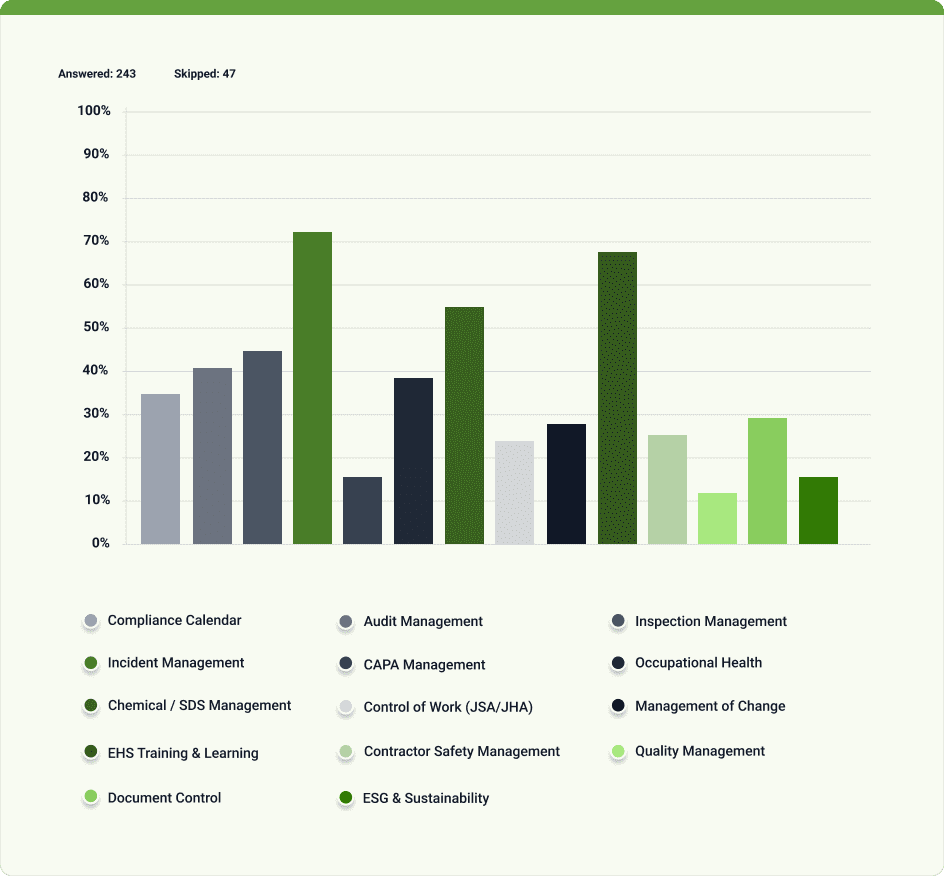
Modern safety management software should do more than store checklists—it should actively guide your organization through a continuous improvement cycle. Modern solutions can be configured to meet the specific needs of different organizations, allowing for customization of forms, workflows, and dashboards to align with unique best practices in safety and industry requirements.
The Plan-Do-Check-Act (PDCA) model provides a practical framework for structuring these efforts, and when paired with the right software, it becomes a powerful engine for driving safety and compliance, helping organizations manage safety risks and compliance.
PDCA and Dakota Software Tools
| PDCA Phase | Key Module | Functionality |
| Plan | Profiler | Determine applicable regulations, track changing requirements, build compliance calendars |
| Do | Tracer | Assign and manage compliance tasks and track corrective actions |
| Check | Auditor | Plan and conduct regulatory and management system audits |
| Act | Scout | Track incidents perform Root Cause Analysis |
- Plan: Establish the foundation of your safety program by identifying risks, setting objectives, and mapping out site-specific compliance obligations. Software should enable the creation of regulatory registers and compliance calendars tailored to each location.
- Do: Execute your safety plans by implementing controls, conducting training, and carrying out inspections and preventive actions. Clear task delegation and employee engagement are critical here.
- Check: Evaluate performance through audits, inspections, and leading indicator tracking. Identify nonconformities and monitor pass/fail rates across locations to find trends and weaknesses.
- Act: Close the loop with corrective and preventive actions. Conduct root cause analyses, track incident follow-ups, and adjust procedures based on findings to ensure continuous improvement.
Incident Management and Root Cause Analysis
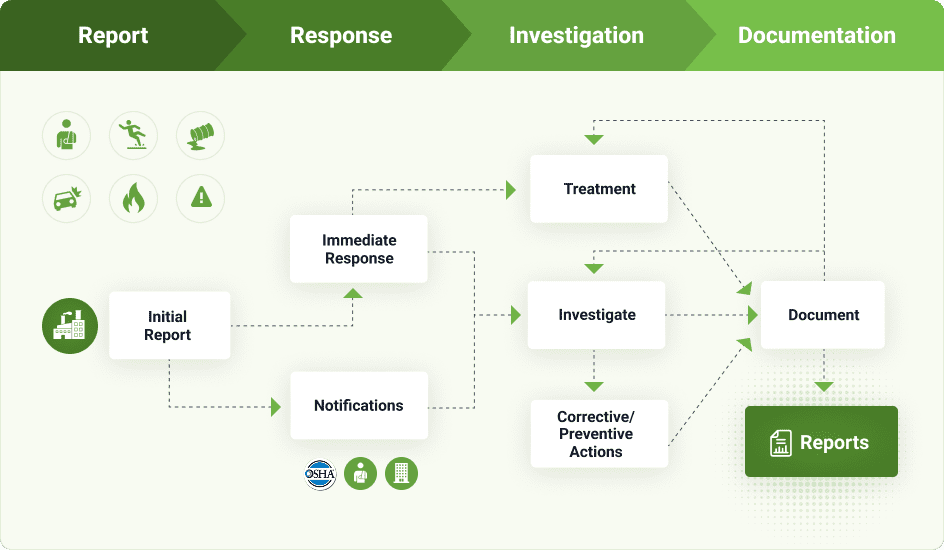
Incident management is often where safety programs begin—but with the right tools, it can also drive a proactive, learning-focused culture. Collecting and analyzing safety-related data is essential for effective incident management and continuous improvement. Modern software should turn every event into a catalyst for improvement and risk reduction.
Real-Time Reporting With Scout
Timely, accurate incident reporting is essential. Dakota’s Scout module enables real-time logging of incidents, near-misses, and unsafe conditions from any device with no login required. This low-friction approach increases engagement and ensures data is captured at the source. One effective way to make reporting easier is to use QR codes.
These can be quickly scanned using a smartphone’s camera app (most smartphone camera apps have the QR scanning feature built in) to show the appropriate website URL. From there, the user just needs to tap the link and then enter the issue details in the right area. For Dakota clients, you can turn the website link from the “Report an Item” button on your login page into a QR code to streamline the process even further.
Incidents are categorized using standardized taxonomies, improving data consistency and enabling more effective trend analysis. Scout also supports First Report of Injury (FROI) documentation, a critical component of OSHA compliance and internal case management. Capturing FROI in real-time helps organizations document injuries accurately and quickly initiate investigations, root cause analysis, and actions for correcting.
Importantly, by recognizing that any incident—regardless of severity—had the potential to be a Serious Injury or Fatality (SIF), organizations can prioritize follow-up based not just on outcome, but on risk. This enables more proactive intervention and a stronger overall safety culture.
Built-In RCA Workflows
Knowing what happened is only half the story when reporting processes, where understanding why is key. Dakota includes integrated Root Cause Analysis workflows and supports methods like the 5 Whys or Fishbone (Ishikawa) diagrams.
Supervisors can initiate analyses, while EHS leaders refine them to meet corporate standards. Dakota’s RCA tools are designed to support a collaborative, team-based approach to investigations, allowing multiple stakeholders to contribute insights and expertise. This leads to more accurate findings, greater buy-in for corrective actions, and a stronger, learning-focused safety culture.
Linking Incidents to CAPAs
Root cause investigations can be immediately tied to Corrective and Preventive Actions (CAPAs) in Tracer. Tasks are assigned, tracked, and escalated as needed, with a full audit trail for accountability.
Because CAPAs link to related audits, training records, and compliance plans, safety leaders gain visibility into broader systemic issues, not just isolated events.
Turning Data Into Insight
Incident data feeds into Insights, Dakota’s analytics module, allowing teams to identify patterns across facilities, job roles, or equipment types. The analytics module provides actionable insights and data-driven insights to improve safety outcomes. For example, repeated hand injuries across multiple sites could spark a company-wide review of training and PPE selection, and analytics can be used to identify trends in incident data.
This connected, analytical approach transforms incidents from one-time events into drivers of long-term improvement. Making incident reporting easier by simplifying forms, allowing anonymous submissions, and enabling mobile access encourages more frontline engagement and richer data collection. With more complete information, organizations can better understand root causes, uncover system-wide process failures, and put controls in place that prevent future harm.
Inspections vs. Audits: Tools for Both Tactical Checks and Strategic Reviews

Inspections and audits are foundational elements of a robust safety system—but they’re not interchangeable. Inspections and audits also play a critical role in helping organizations comply with safety regulations by ensuring that processes and documentation meet legal and industry standards. Understanding their distinct roles allows organizations to address both immediate risks and systemic weaknesses with equal precision.
Inspections vs. Audits Comparison
| Aspect | Inspections | Audits |
| Purpose | Identify immediate hazards or unsafe conditions | Verify effectiveness of safety programs and regulatory compliance |
| Frequency | High (daily/weekly) | Lower (quarterly/annually) |
| Focus | Operational safety and conditions | System-level compliance and documentation |
| Typical User | Frontline employees, supervisors | Corporate EHS staff, external auditors |
| Level of Detail | Quick checks, visual observations | Thorough reviews, documentation required |
Inspections: Frontline Visibility and Hazard Prevention
Inspections are frequent, checklist-driven evaluations designed to catch hazards before they escalate. Conducted by supervisors or maintenance staff, they focus on immediate risks, like blocked exits, faulty PPE, or unsafe behaviors.
With Dakota’s Inspections tool, teams can complete evaluations on the go using mobile devices, even offline. Prebuilt OSHA- and EPA-aligned checklists standardize the process, while real-time entry ensures that findings are addressed quickly.
Inspections also double as engagement tools. Involving employees in daily walkarounds helps reinforce hazard awareness and promote safer behaviors on the job. Findings from inspections can be discussed in safety meetings to promote awareness and ensure corrective actions are taken.
Audits: Program-Level Assurance and Compliance Validation
Audits take a broader view, assessing whether safety programs are being followed, documented, and producing results. Often tied to ISO 45001 or corporate protocols, they uncover systemic issues like outdated procedures or gaps in training and hazard communication.
Dakota’s Auditor module supports in-depth, standards-aligned evaluations using curated checklists and regulatory content. Teams can assess applicability, document findings, and link them directly to compliance plans and corrective actions—all in one platform.
A Unified Approach With Dakota Software
Dakota Software integrates inspections and audits into a single system. Insights dashboards highlight trends across both processes, helping safety leaders identify recurring issues or outliers by site, department, or process.
Together, these tools form a layered safety strategy: Inspections address day-to-day risks, while audits ensure the system is sound. Dakota coordinates both efforts, makes them traceable, and aligns them with goals.
Corrective Action and Task Tracking
 Identifying issues is only part of safety management. True progress comes from resolving them, tracking outcomes, and learning from each event. Dakota’s Tracer module turns findings into action and accountability by providing tools for tracking corrective actions and ensuring accountability.
From Finding to Follow-Through
Whether it’s an audit finding, near-miss, or expired permit, Tracer converts safety activities into actionable tasks. Each is assigned to an owner with deadlines, documentation, and status tracking. A centralized log keeps everything transparent and eliminates reliance on emails or spreadsheets. The system can also generate custom reports to track task completion and safety metrics, supporting data-driven EHS management with a matching safety management system.
Enterprise-Wide Visibility
Visibility is key for multi-site operations. Tracer consolidates tasks across locations into a single dashboard. Site managers see only their items, while EHS leaders can monitor trends and prioritize follow-up by location, risk, or due date, keeping everyone aligned and accountable.
CAPA Integration and RCA Linkage
Tracer links tasks directly to Scout’s Root Cause Analysis (RCA) findings, ensuring every corrective action addresses the root problem. It also supports preventive actions to mitigate risks before incidents occur, making safety proactive rather than reactive.
Defensible Documentation and Continuous Learning
All changes and completions are timestamped for a complete audit trail. During reviews, safety teams can show exactly how and when each issue was resolved. More than just a task list, Dakota’s system reinforces a safety-first culture. Tracking corrective actions and outcomes also provides valuable data for monitoring and improving EHS performance over time.
Employee Training Integration That Drives Performance
Employee training goes beyond a compliance checkbox, becoming a key driver of performance. Dakota Software embeds training into operational workflows, making it timely, relevant, and actionable. The platform supports comprehensive training management, including scheduling, tracking, and reporting on employee training to ensure regulatory compliance and effective safety practices.
Targeted, Just-in-Time Delivery
Training can be triggered by job roles, audit findings, or incidents. For example, if an investigation reveals a lockout/tagout gap, Dakota automatically assigns and tracks the refresher course. This just-in-time approach improves retention and ties learning directly to workplace events.
Automated Retraining and Compliance Tracking
Recurring requirements are handled automatically. Dakota alerts managers about overdue courses and reminds employees before deadlines, ensuring training remains current without manual oversight.
Flexible for a Modern Workforce
Dakota’s training platform supports microlearning, adaptive content, and multilingual delivery—ideal for mobile, global teams. Interactive, scenario-based design helps employees apply lessons in real-world settings.
Linking Training to Safety Outcomes
Training metrics connect to incidents, audits, and inspections, highlighting areas where untrained staff or outdated knowledge may pose risks. With Insights, EHS leaders can track effectiveness and refine programs based on actual performance.
Proactive Safety Monitoring and Real-Time Risk Management

Traditional safety programs rely on lagging indicators like OSHA logs or incident rates—by then, it’s too late. Health and safety software enables organizations to move from reactive to proactive management by providing tools for real-time monitoring, incident reporting, and compliance tracking. Dakota Software enables a proactive approach, using real-time data to spot risk before it leads to harm
From Reactive to Predictive
Dakota’s ProActivity Suite captures leading indicators, including near-misses, overdue training, and failed inspections, and flags trends early. A pattern of PPE violations, for example, can prompt action before an injury occurs.
Modules like Scout, Inspections, and Tracer work together to surface emerging risks across your sites and teams.
Dashboards That Drive Action
With Insights, safety data becomes visual and actionable. Heat maps, trend lines, and real-time dashboards help teams monitor KPIs, identify problem areas, and act quickly. Real-time dashboards support leaders in making informed decisions to improve safety. Instead of gut decisions, leaders can rely on data to guide interventions.
By combining leading and lagging indicators, safety leaders gain a clearer view of both current conditions and potential risks. Leading indicators, such as training completion rates, hazard observations, or safety meeting participation, highlight proactive efforts that reduce the likelihood of incidents. Lagging indicators, by contrast, measure outcomes after an event occurs.
Two of the most widely tracked are TRIR (Total Recordable Incident Rate) and DART (Days Away, Restricted, or Transferred), both of which are used by OSHA to evaluate injury trends and overall performance across industries.
Real-Time Alerts and Escalations
Dakota automates alerts when risk thresholds are exceeded, such as unresolved CAPAs or high-severity incidents. Escalation rules ensure the right people are notified, helping teams move quickly from detection to resolution.
Built for High-Stakes Environments
Speed and visibility are critical in industries like manufacturing, construction, or energy. Dakota’s unified platform offers enterprise-wide monitoring from a single system, supporting both day-to-day safety management and high-level ESG reporting. By integrating analytics and automating inspections, Dakota enhances operational efficiency, streamlining processes and optimizing workflows to improve safety operations in high-stakes environments.
How Health and Safety Software Supports Culture, Not Just Compliance
Compliance may drive adoption, but lasting value comes when safety software fosters a culture where everyone, not just the EHS team, owns safety. Dakota Software helps embed safety into daily operations, encouraging participation, trust, and transparency. By facilitating employee engagement in safety programs, Dakota Software promotes active involvement through features like training management and communication tools, strengthening the organizational safety culture.
Empowering Frontline Workers
Dakota’s Scout module makes reporting easy—there are no logins or complex forms. This low-friction access encourages employees to speak up, leading to more reporting, earlier interventions, and stronger frontline engagement.
Freeing Up EHS Leaders
Automated workflows reduce administrative overhead, allowing safety professionals to spend more time in the field, coaching, leading walkthroughs, and driving cultural change.
Promoting Shared Accountability
Role-based dashboards give every stakeholder, from site managers to executives, visibility into open tasks, audit results, and training status. This transparency fosters ownership and aligns teams around shared goals. By providing clear insights, these dashboards help teams align around safety goals, ensuring everyone is working toward reducing risks and improving overall safety performance.
Enabling Two-Way Communication
Employees can share observations, comment on findings, and suggest improvements, building a feedback loop that drives consistent improvement and reinforces psychological safety.
Key Features That Define the Best Safety Management Software

Not all EHS software is created equal. While many systems offer basic checklists and form builders, few deliver the depth, flexibility, and intelligence required by high-risk, compliance-driven organizations. The best solutions function as comprehensive EHS management and EHS software platforms, offering features like incident reporting, compliance tracking, and risk management to support workplace safety and regulatory adherence. The best EHS software for safety goes beyond functionality and supports strategy, scales with your business, and reinforces the safety lifecycle from plan to prevention.
1. Mobile-First, Field-Ready Access
Safety doesn’t happen behind a desk. Field teams need access to forms, checklists, incident reports, and tasks wherever they are, whether on the plant floor, at a remote job site, or in areas with limited connectivity. The very things found in high-quality EHS software. Dakota’s mobile-optimized tools support inspections, reporting, and corrective actions on any device.
This mobile-first approach improves adoption, shortens reporting cycles, and ensures data is captured accurately at the source, in real time.
2. Configurable Workflows That Reflect Your Organization
Every organization structures its safety programs differently—by business unit, facility type, geography, or regulatory requirement. The best safety platforms allow administrators to configure workflows that align with these structures, without requiring costly vendor-side customization. This flexibility ensures that configurable workflows can support the unique needs of various industries, making the platform suitable for a wide range of sectors.
With Dakota, workflows can be adapted to support site-specific audits, role-based task approvals, or tiered escalation rules, ensuring the software fits the business, not the other way around.
3. Role-Based Dashboards for Enterprise-Wide Buy-In
EHS software must serve the needs of every user to be embraced. Dakota’s role-based dashboards surface the most relevant data for each stakeholder. Frontline users see open tasks and inspections, managers see compliance performance and audit scores, and executives see safety KPIs across the enterprise.
This tailored visibility improves clarity, accountability, and cross-functional engagement—key ingredients for building a safety culture that sticks.
4. Embedded Regulatory Intelligence
One of Dakota’s core differentiators is its content-first architecture. Unlike platforms that leave users to interpret complex regulations themselves, Dakota embeds expert-curated OSHA, EPA, and and other requirements content directly into the tools.
Dakota’s platform helps organizations stay compliant with changing regulations by providing continued updates that reflect evolving legal and industry standards. This means users have access to prebuilt protocols, applicability guidance, and real-time updates, eliminating guesswork and ensuring that safety efforts are aligned with evolving compliance requirements.
5. Analytics That Drive Action
Reporting shouldn’t be an afterthought in EHS software. Dakota’s Insights module transforms raw safety data into actionable intelligence, enabling users to track both leading and lagging indicators across teams and timeframes.
From task completion rates to audit nonconformance trends, these analytics help safety leaders focus resources, spot emerging risks, and demonstrate impact to stakeholders at every level, making for efficient management. The benefits of using analytics in safety management include improved compliance, better tracking, increased employee satisfaction, higher productivity, and a stronger public image.
Matching Software to Stakeholder Needs
Safety management is a shared responsibility, but each stakeholder has a different lens. Corporate EHS leaders think in terms of strategy, scalability, and risk exposure, while site-level safety managers focus on day-to-day tasks, documentation, and training.
Effective safety software must meet both needs without compromise, providing access to safety data sheets for relevant stakeholders to ensure comprehensive chemical safety information is available when needed. Dakota Software’s ProActivity Suite is built to do exactly that.
Corporate EHS Leaders: Prioritizing Visibility and Consistency
At the corporate level, EHS leaders are responsible for setting safety policy, monitoring enterprise-wide performance, and ensuring regulatory compliance across facilities. They need a solution that offers:
- Centralized oversight across business units and geographies
- Standardized tools for audits, inspections, and incident reporting
- Analytics and benchmarking to track progress and report on KPIs
- Audit readiness and legal defensibility with version control and documentation trails
Dakota Software delivers all of this by integrating safety processes under one platform with prebuilt regulatory content, dashboards, and seamless cross-site reporting. Leaders can evaluate trends across hundreds of locations with confidence, not just intuition.
Site Safety Managers: Enabling Speed, Simplicity, and Follow-Through
Site-level safety professionals often juggle inspections, training, incident response, and compliance tasks, frequently with limited resources. For them, the software must be:
- Fast and intuitive to use, even in high-pressure situations
- Mobile-accessible for inspections, observations, and corrective actions
- Role-aware, surfacing only what’s relevant to their site
- Integrated, so data flows between audits, incidents, and training without duplication
Modules like Scout, Inspections, and Tracer empower frontline teams to act quickly and consistently, while automatically syncing with higher-level compliance goals. Dakota helps site teams focus on what matters most by reducing administrative friction: preventing harm and staying ahead of risk.
Adaptability Across High-Risk Industries
Whether you’re operating in energy, manufacturing, construction, food & beverage, or chemical processing, the challenges of maintaining safe operations are similar: high regulatory exposure, dynamic work environments, and distributed teams.
Dakota’s tools are tailored to support these demands, with configurable templates, flexible pricing, and industry-specific content that allows organizations to scale confidently, whether they manage five locations or five hundred. In addition to safety management, Dakota’s solutions also help organizations advance their sustainability initiatives by enabling data tracking and compliance for environmental goals.
Evaluating Safety and Compliance Software Vendors

Choosing a safety and compliance software vendor isn’t just a technology decision, it’s a strategic partnership that will influence how effectively your organization manages risk, meets regulatory requirements, and drives improvement. Selecting the right software can also help organizations reduce costs related to workplace incidents and compliance.
To make the right choice, safety leaders must evaluate more than just features—they must assess how well the solution supports long-term goals, adapts to change, and aligns with proven safety frameworks like PDCA.
1. Onboarding and Client Success Support
Implementation success can make or break adoption. The best vendors provide structured onboarding programs with timelines, milestones, and expert guidance. Dakota Software assigns every client a dedicated Client Success Manager who facilitates training, configures site-specific setups, and ensures the system delivers value from day one.
This ongoing support doesn’t end after launch. Dakota’s Success Team continues to provide strategic check-ins, user engagement insights, and best-practice sharing, ensuring your team evolves alongside the platform.
2. Regulatory Intelligence and Update Mechanisms
Regulations change—your system should, too. Unlike other platforms that rely on clients to input regulatory content or third-party updates, Dakota includes a proprietary regulatory database maintained by in-house experts.
Every month, Dakota releases rule updates that automatically inform compliance calendars, audit protocols, and applicability questions. This reduces the burden on your team, eliminates the risk of missed changes, and ensures ongoing alignment with federal and state regulations.
3. Audit Trail and Version Control
In high-stakes industries, defensibility matters. Dakota’s platform tracks every action, comment, and status change—automatically creating a timestamped audit trail. Whether you’re preparing for an ISO 45001 certification, an OSHA inspection, or internal review, the system provides a full history of what was done, when, and by whom.
This version control is critical for demonstrating due diligence, closing the loop on CAPAs, and avoiding regulatory penalties tied to documentation gaps.
4. Flexible, Scalable Pricing Models
Traditional licensing models—charging by the user or module—can limit adoption and penalize growth. Dakota offers unlimited user pricing models that remove these barriers, making it easier for large, distributed organizations to expand usage across departments and facilities.
Whether your team grows, merges, or restructures, Dakota’s model ensures that access and value scale with you.
Why Dakota Software Is a Top Safety Management Software Solution
Dakota Software stands out in a crowded EHS market by delivering a content-first, compliance-driven platform built for high-risk industries. The ProActivity Suite helps organizations move beyond basic tracking and toward system-wide safety excellence through regulatory intelligence, integrated workflows, and real-time visibility.
These integrated tools and real-time insights help organizations enhance workplace safety by supporting risk assessment, incident reporting, and overall safety management.
A Complete, Integrated Suite
Dakota’s modular platform supports the entire safety management lifecycle:
- Profiler builds site-specific compliance calendars
- Auditor standardizes assessments using curated regulatory content
- Tracer tracks CAPAs with enterprise-wide transparency
- Scout enables mobile incident and near-miss reporting
- Insights turns data into trends, dashboards, and decisions
Organizations can deploy modules individually or as a unified system, scaling as needs grow.
Regulatory Intelligence at the Core
Unlike generic tools, Dakota is powered by a proprietary Decision-Tree-Logic engine that determines applicable regulations by site and auto-updates compliance plans monthly. This ensures that all tasks, checklists, and audits reflect current legal obligations—no spreadsheets or guesswork required.
Trusted in High-Stakes Industries
Leaders in energy, manufacturing, chemicals, construction, and food & beverage rely on Dakota for scalable, field-tested safety solutions. Whether managing multi-site audits or streamlining inspections on the shop floor, users get tools that work where it counts.
Built for Growth
Dakota helps companies mature their safety programs without outgrowing their software with unlimited-user pricing, guided onboarding, and expert support. For teams prioritizing compliance, visibility, and culture, Dakota delivers more than a system, it delivers a strategy.
Conclusion
A safer workplace doesn’t happen by accident, but is built through structure, visibility, and sustained engagement. With Dakota Software, organizations gain more than digital checklists or compliance tracking. They gain a content-driven platform that connects frontline reporting with enterprise oversight, simplifies regulatory complexity, and supports improvement across locations.
Whether you’re refining a mature SMS or building one from scratch, Dakota provides the tools and insight to foster a strong safety culture and reduce risk, one action, audit, and improvement at a time.
Ready to take the next step? Schedule a demo or explore Dakota Software’s ProActivity Suite to see how it can elevate your safety performance from reactive to resilient.